Voters went to the polls on November 27, 2024 in a general election testing whether SWAPO could preserve its dominance and whether Namibia would choose its first woman president.
Hong Kong's top court has dismissed the government's appeals, confirming that same-sex couples cannot be excluded from public housing and inheritance benefits on the basis of their relationship.
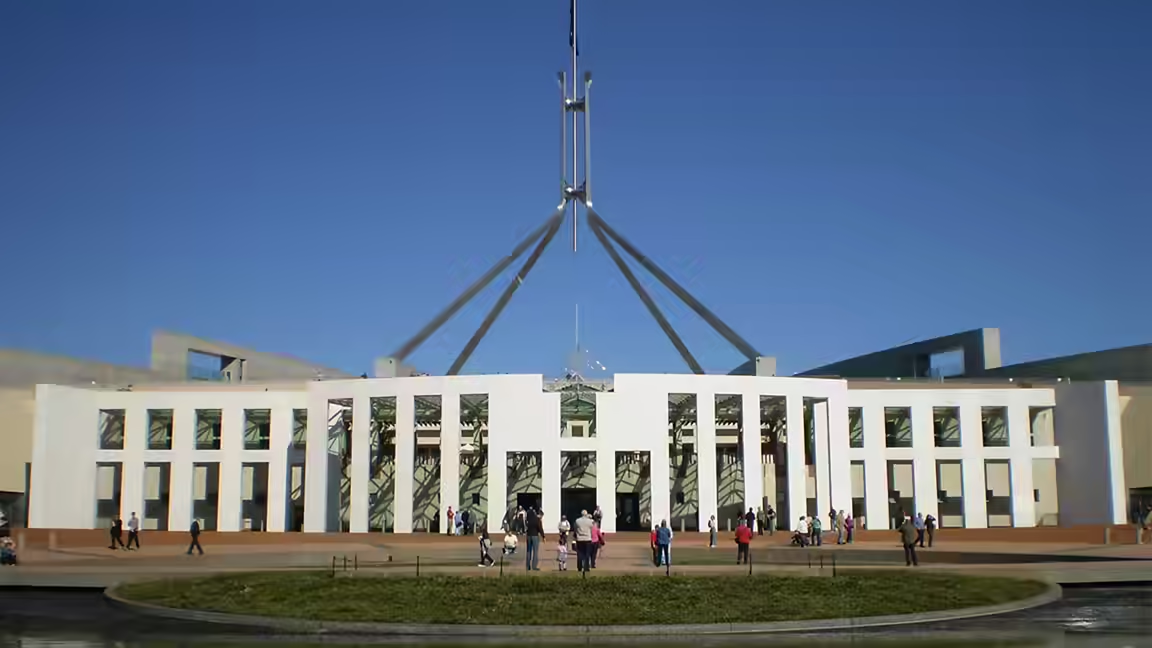
Australia’s government pulled a proposed misinformation law after concluding it could not secure passage in the Senate, ending a push that critics said would hand excessive oversight power to the media regulator.
U.S. District Judge Tanya Chutkan dismissed the federal election case against Donald Trump after special counsel Jack Smith moved to close it before inauguration.
Regional lawmakers returned Ahmed Madobe to office with 55 of 75 votes as Jubaland’s election dispute deepened its political rift with Somalia’s federal government.
President Vladimir Putin signed legislation blocking adoptions of Russian children by citizens of countries where gender transition is legal and also approved a separate ban on material said to encourage childlessness.
Israel has approved a resolution to sever official contact with Haaretz and bar state funding bodies from advertising with the paper, marking a sharp escalation in its dispute with the independent daily.
A proposed constitutional overhaul would erase municipal autonomy, weaken separation of powers and bind the security forces more tightly to the presidency.
The federal police send a sealed case file to the Supreme Court, moving the former president closer to formal charges over the aftermath of his election loss.
The International Criminal Court says it found reasonable grounds to believe Benjamin Netanyahu and Yoav Gallant bear criminal responsibility for alleged war crimes and crimes against humanity in Gaza.
Serbian prosecutors have arrested 11 people, including former construction minister Goran Vesić, in an investigation triggered by the fatal Novi Sad railway station collapse and the protests that followed it.
Iraq has begun its first comprehensive national census since 1987, with a curfew in place and officials warning that the count could affect resources, budgets and long-running political tensions.
![Governor General, Sir Isaac Isaacs, receive VIPs at Government House, Yarralumla [Parliament House ?]](/media/articles/commons-a66061863da2.avif)








![37th Smart National Taekwondo Championships [1] SMART national taekwondo tourney set July 20, 21 , Philippine Sports Commission, - in -- the Rizal Memorial Coliseum [2] The Rizal…](/media/articles/commons-9ffd2a786a68.avif)