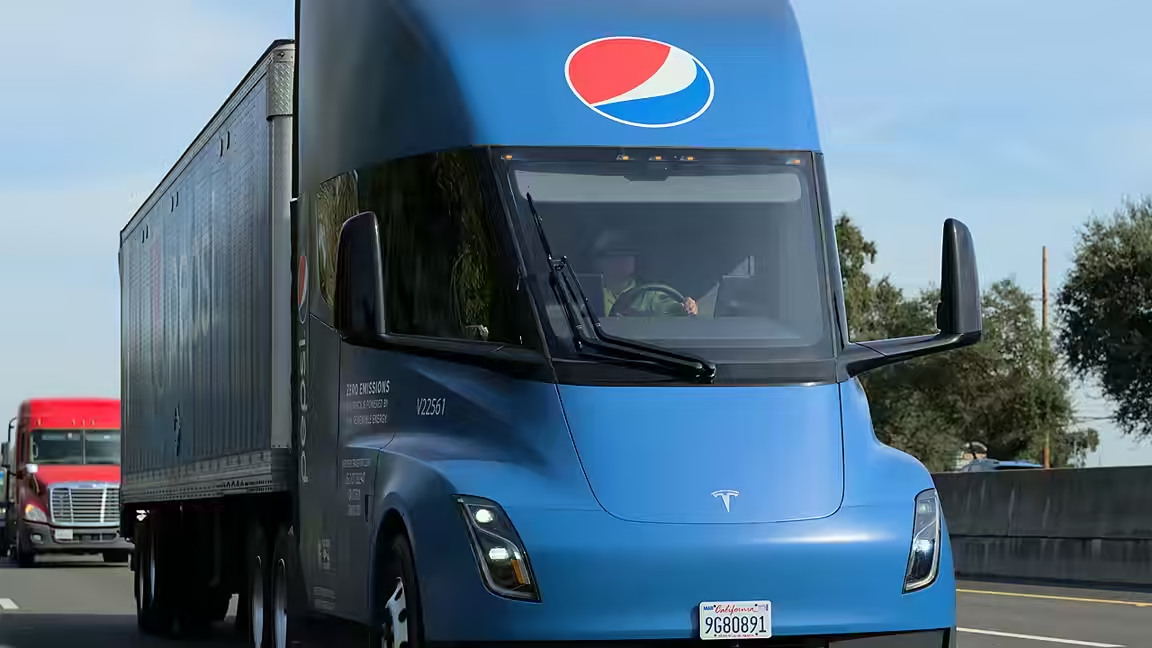
A Tesla Semi caught fire on Interstate 880 near Hayward, California, forcing authorities to close the freeway for roughly 10 hours while emergency crews dealt with the truck's burning battery, according to a report by Electrek. The driver left the vehicle safely and no crash was reported before the fire.
The incident began at about 5:35 p.m. Pacific time in the southbound lanes near the Route 92 interchange. The California Highway Patrol's Hayward office initially shut both directions because of concern about smoke from the vehicle. Northbound traffic reopened first, while southbound lanes remained unavailable into the following morning as responders worked at the scene and the damaged truck was removed.
The long disruption illustrates the operational challenge that a large battery fire can create on a major road. Lithium-ion cells can retain substantial energy after a fire begins, and responders may need extended time to cool and monitor a pack. In this case, the closure duration was reported as about 10 hours. The supplied account does not establish what started the blaze, whether a component failed or whether the vehicle had experienced damage before the visible fire.
That distinction matters. The report says there was no collision associated with the incident, but an absence of a reported crash is not itself proof of a technical cause. A credible investigation would need to examine the vehicle, battery pack, operating data and any maintenance history. No conclusion about the origin of the fire was included in the available evidence.
The event comes as Tesla moves toward broader production of its Class 8 electric truck. A fire involving an early commercial vehicle is likely to draw scrutiny from fleet operators because heavy trucks spend long periods in service and carry much larger battery packs than passenger cars. Operators assessing electric trucks must consider not only range, charging and payload, but also emergency procedures, driver training, depot planning and coordination with local fire departments.
It would also be misleading to infer a comparative fire rate from one incident. Conventional diesel trucks can catch fire as well, and determining the relative risk of different powertrains requires consistent fleet-size and mileage data rather than individual reports. What is clear from the Hayward event is its immediate consequence: a driver escaped unharmed, emergency officials treated the smoke as a potential hazard, and one of the Bay Area's main traffic corridors remained restricted for hours.
Tesla had not provided an explanation for the fire in the supplied report. Until investigators or the manufacturer release findings, the cause should be regarded as undetermined.