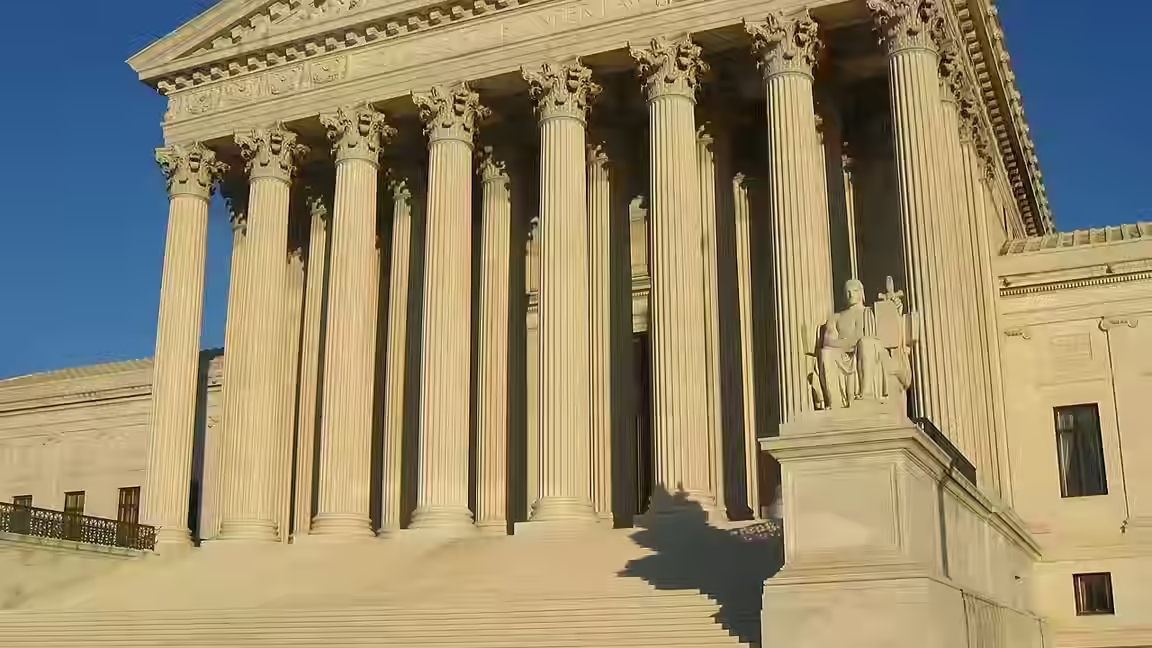
The US Supreme Court has refused to clear the way for new federal restrictions on mail ballots before the November 2026 midterm elections, leaving in place a lower-court order that temporarily blocks the US Postal Service from implementing the rules. The decision is an immediate setback for President Donald Trump’s administration, but it does not finally decide whether the policy is lawful.
Trump’s March executive order directed the Postal Service to deliver ballot materials only to voters appearing on citizenship lists. It also called for unique barcodes on postal-ballot envelopes and for state and local election officials to provide information through an online portal about voters receiving mail ballots. The administration argued that the measures would combat fraud and fell within the Postal Service’s authority.
Twenty-three states and Washington, DC, challenged the order, arguing that it intruded on states’ constitutional role in conducting elections. Election officials also warned that changing procedures shortly before voting could cause delays, confusion and rejected ballots. A postal-workers’ union said there was insufficient time to train clerks. Some states had already begun distributing ballots, while others had printed election materials that would be costly to replace.
Justice Brett Kavanaugh joined the court’s decision to leave the block intact. He wrote that the final rule might ultimately fall within the Postal Service’s legal authority, but concluded that applying it during the 2026 elections would be arbitrary and capricious. Justices Samuel Alito and Clarence Thomas dissented, saying the challengers were unlikely to prevail in the end. Those positions underscore that the merits of the case remain open as litigation continues.
The Supreme Court action preserves an injunction issued on September 4 by US District Judge Indira Talwani in Boston. Talwani found that introducing the measures close to the election risked disenfranchising voters. A federal appeals court declined to suspend her order, and another federal judge separately ruled against the policy before the dispute reached the justices on an emergency basis.
The operational stakes differ widely by state. Oregon, Washington and Colorado rely heavily or entirely on voting by mail. Seven Republican state election officials joined warnings that a late change would produce mistakes and disruption, even as Republican-led states including Florida, Louisiana and Montana supported the administration in court filings. Local administrators said they were continuing normal preparations while developing contingency plans.
Trump criticized the ruling and said it harmed Republicans. Legal groups opposing the policy welcomed it as protection against election disruption. Those political reactions do not alter the decision’s limited legal effect: the new requirements cannot be used for the approaching midterms, but courts may still uphold some or all of them after fuller review.
For voters and election offices, the practical result is continuity. Existing mail-ballot procedures remain in force for now, avoiding a nationwide postal-rule change after election preparations were already underway. The larger dispute—how far federal postal authority can shape state-run voting systems—will continue beyond this emergency-stage ruling.