A Florida woman who spent 13 days in jail after being wrongly accused of causing a fatal crash has told US lawmakers that police relied on a single automated license-plate camera sighting despite physical details that pointed away from her vehicle.
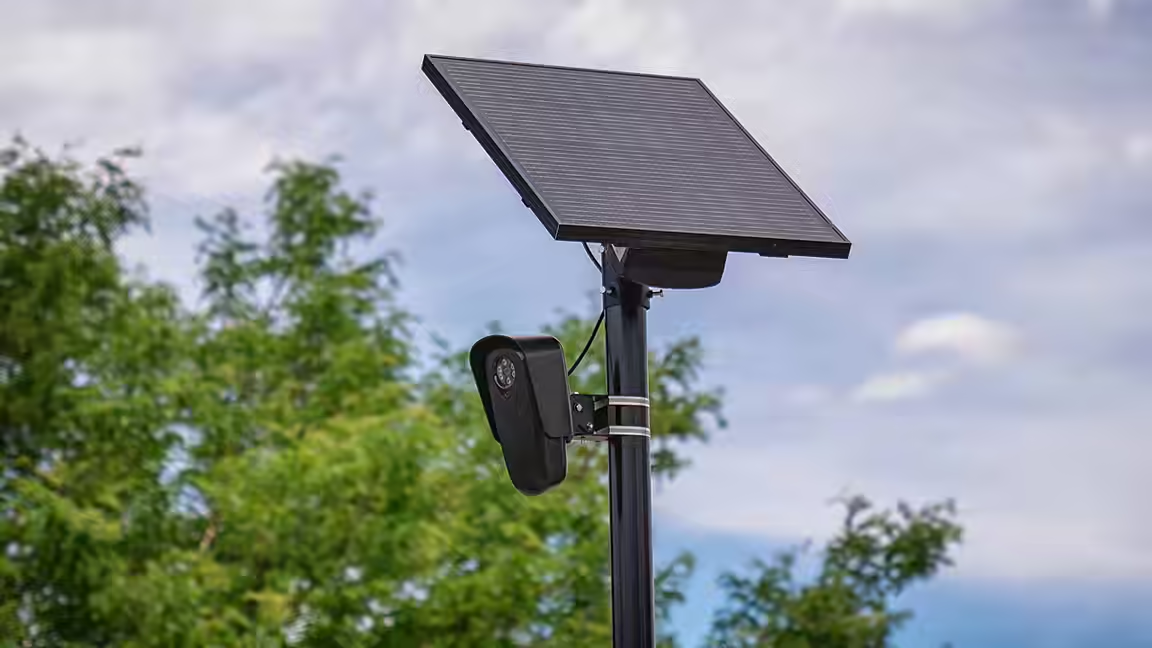
Lindsey Isaacs, a 23-year-old Palm Beach resident, described the case in congressional testimony this week. According to the supplied report, a Flock Safety camera recorded her black Dodge Durango several miles from the scene of an October 2025 collision that killed three people. Witnesses had described the vehicle involved as a maroon Durango. Isaacs's SUV also showed none of the collision damage investigators alleged it had.
State troopers nevertheless seized the vehicle shortly after the crash. Seven months later, on April 17, 2026, authorities arrested Isaacs on eight felony counts, including three counts of vehicular homicide. She remained in maximum-security custody for nearly two weeks and said 86 consecutive hours were spent in solitary confinement because of the seriousness of the allegations.
Isaacs testified that the prospect of a life sentence for a crash she knew she had not caused left her frightened and hopeless. Her release came after her lawyer showed a judge photographs of the impounded SUV demonstrating that it was undamaged, according to the report. A judge then granted bond. Florida dropped all charges in May, and authorities arrested another woman in connection with the collision around the same period.
The account raises questions about how police use automated license-plate readers, which photograph vehicles and associate plate numbers with locations and times. Such a record can establish that a plate passed a camera, but it cannot by itself establish who was driving, whether a vehicle was involved in a crime or whether other identifying details match. In Isaacs's case, the reported differences in vehicle color and condition were basic investigative checks available independently of the camera result.
Isaacs has filed a civil lawsuit against Florida Highway Patrol troopers, the report says. The allegations in that case will have to be tested through the legal process, but the dismissal of the criminal charges and her testimony have already made the episode part of the national debate over police surveillance technology.
Her experience illustrates the stakes when an automated lead is elevated above corroborating evidence. License-plate systems can help investigators narrow a search, but the reported sequence in this case shows why a database hit must remain a starting point. Human review of the vehicle, witness descriptions and physical evidence is essential before the state deprives someone of liberty.