# Developer ports Doom to Nikon Z 6II while building an Expeed 6 emulator
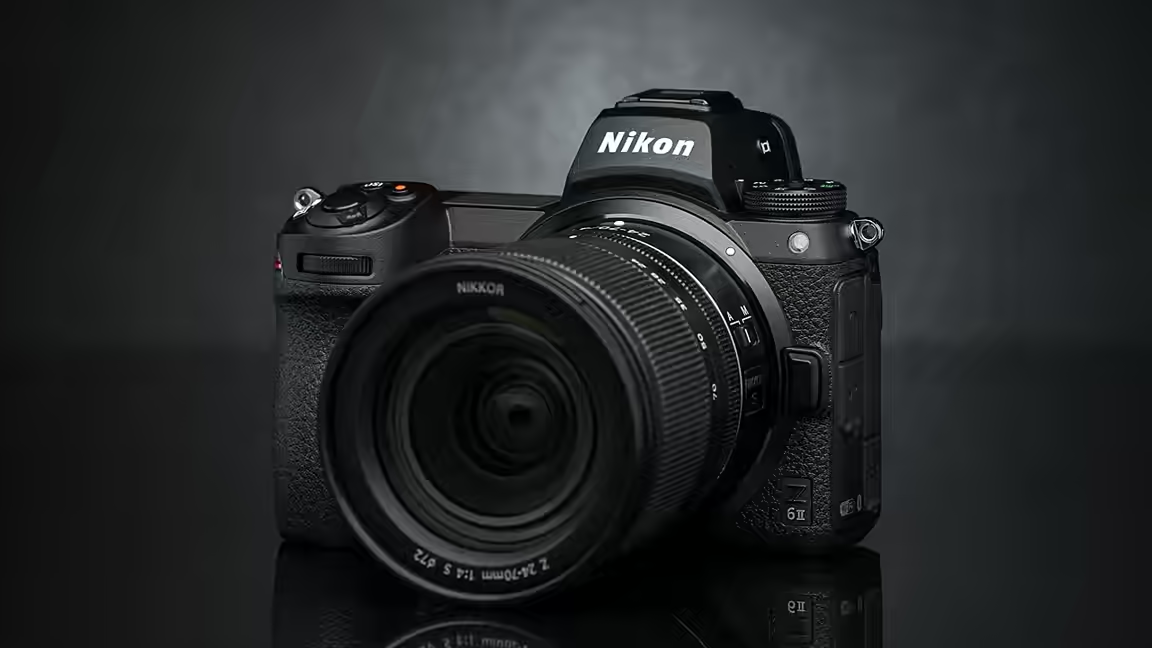
An independent developer has run Doom on a Nikon Z 6II mirrorless camera and released the code as part of a broader effort to emulate the camera’s internal hardware. The game port is the visible demonstration, but the larger project is qemu-expeed, a QEMU-based emulator intended to make Nikon firmware research and extension development more practical.
The Z 6II uses two Nikon Expeed 6 systems-on-chip and runs T-Kernel, a real-time operating system. According to the developer, Nikon does not publish the detailed processor documentation needed to reproduce the platform. The work therefore required examining camera firmware, interpreting register activity and comparing the results with limited public material.
A key clue came from similarities between some Expeed 6 peripherals and components in GoPro’s GP1 and GP2 processors. GoPro’s published kernel changes helped identify several hardware interfaces, although the developer cautions that Nikon’s chips remain substantially different. That process led to an emulator able to boot genuine Z 6II machine code on a computer, where memory and emulated peripherals can be inspected more easily than on physical camera hardware.
The current emulator supports several recognizable camera functions. The project page says it can display the live view and menus, play back images, capture still photographs and perform automatic exposure. It also includes a partial reconstruction of Nikon’s image-processing unit. As a result, the displayed live-view image passes through an emulated version of the camera’s raw-processing pipeline instead of being substituted with an unrelated picture.
The Doom port runs as a custom T-Kernel task. The developer describes it as the first Nikon-camera Doom port with publicly available code, while emphasizing that gaming was not the project’s primary purpose. The emulator is meant to shorten the feedback loop for researchers who want to understand firmware behavior or experiment with extensions without repeatedly testing uncertain code on an expensive camera.
Agentic coding tools contributed to debugging, utility development and roughly 16,000 lines of QEMU C code. The developer also notes a tradeoff: delegating portions of the work accelerated the demonstration but left some generated code in need of closer understanding and refinement.
Further technical posts are planned on the Expeed 6 design, Nikon’s imaging pipeline and communication between the Z 6II’s two processors. The developer says some sensitive areas, including autofocus and auto-exposure algorithms, will not be documented. For now, qemu-expeed and the Doom port offer a public starting point for examining a platform whose internal architecture has largely remained closed.