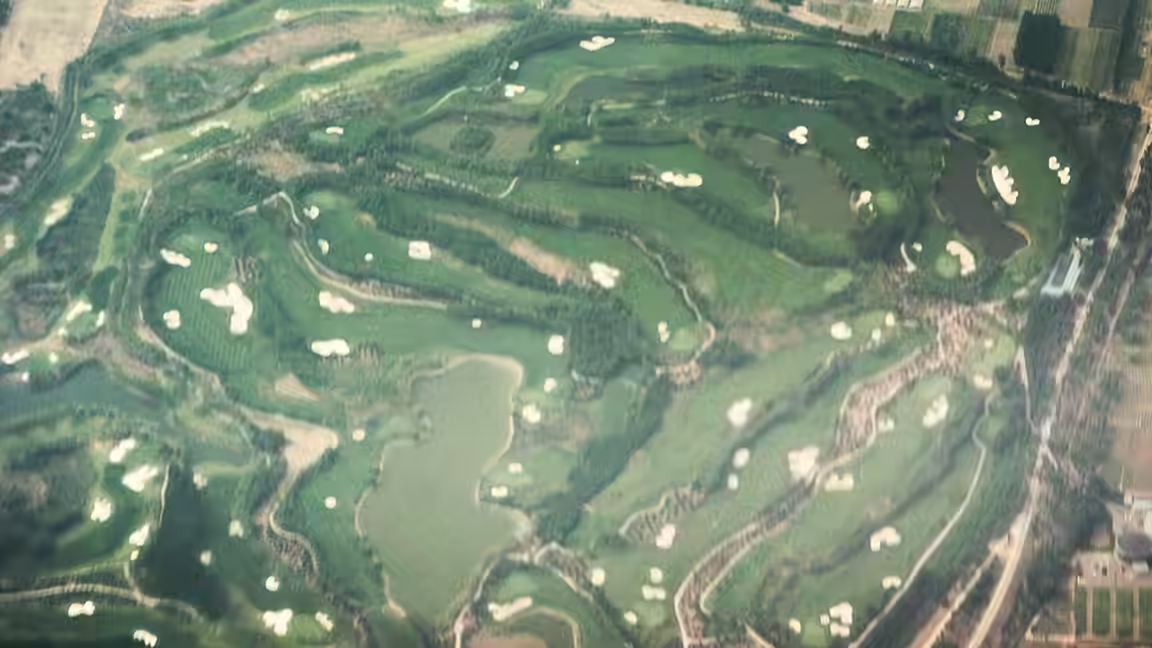
At least 18 golf courses across China announced closures in November, including 10 in Beijing, according to an AFP tally of public notices and social-media posts. Many operators cited government requirements, pointing to a renewed official clampdown on a sport long associated by the ruling Communist Party with wealth, privilege and official misconduct.
Employees at several courses confirmed to AFP that authorities had ordered closures, though some said they had not been told the reason. Online footage showed facilities at at least four courses being dismantled. Notices from some operators referred to national plans concerning the political work of golf-course renovation, without providing a detailed policy explanation.
The latest closure in AFP's report involved the driving range at Dongfeng International Sports Park in central Beijing. The facility said it ceased operations from November 25 in accordance with requirements from relevant departments. At the site in Chaoyang district, practice mats, signs and heating lamps had been removed while employees handled calls from members seeking refunds. A construction truck stood on the grass.
The affected venues were not limited to the capital. The tally included a course on Hainan island, one carrying the St Andrews name and at least two in Jiangsu province. The geographic spread suggests action broader than a single municipal enforcement campaign, although authorities had not publicly supplied a comprehensive nationwide list or a unified explanation in the reporting available.
Golf has faced periodic restrictions in China for more than a decade. Beijing prohibited the use of public money for the sport in 2015 and announced that roughly 60 illegal courses would close as it enforced an earlier moratorium on new construction. State media has also cited golf participation in corruption cases, reinforcing the activity's political association with elite excess.
The sport subsequently regained ground and China produced internationally successful players, including Yin Ruoning. The new round of closures therefore interrupts a period in which golf had continued to develop despite its politically sensitive status.
For course workers and members, the effects were immediate. One Dongfeng employee told AFP that the range had members paying thousands of yuan for multi-month packages but said staff knew no more about the reason for closure than the public notice disclosed. Another worker said she had learned of the shutdown only a day before her final shift and would have to seek new employment.
The available evidence establishes a wave of closures and official involvement at multiple sites. It does not yet establish whether every action follows one national directive, how long the shutdowns will last, or whether operators can reopen after remediation. Further guidance from Chinese authorities will determine whether this is a targeted compliance campaign or a lasting contraction of the country's golf industry.