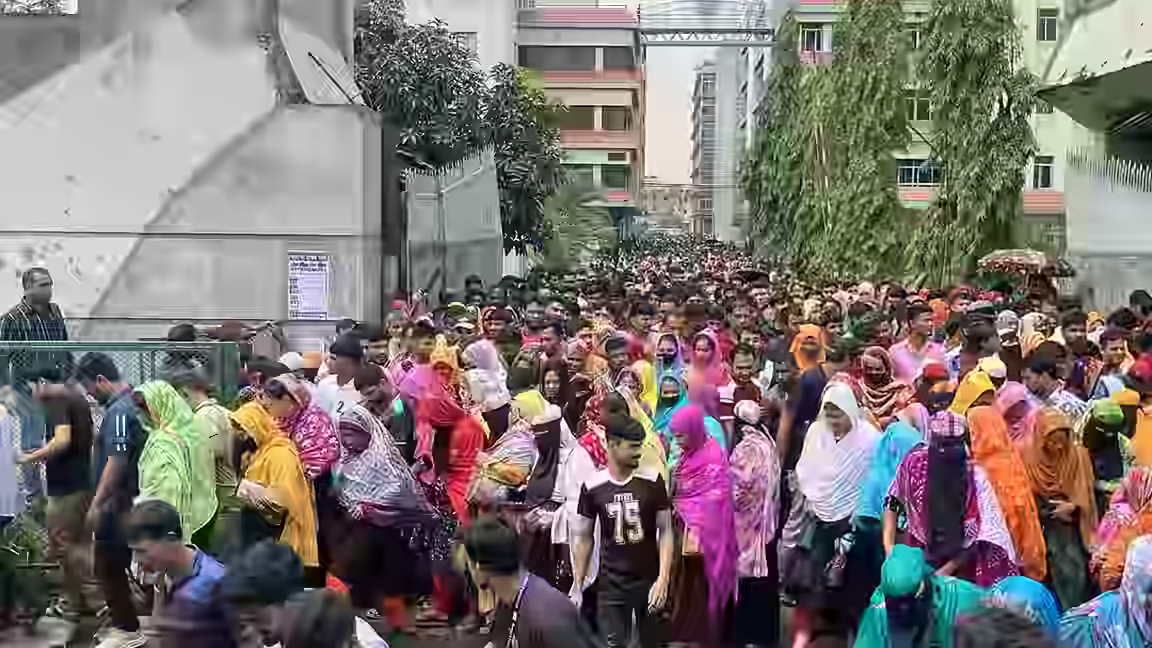
Authorities and factory operators closed 13 garment plants in Bangladesh's Gazipur district indefinitely on November 15 amid continuing worker protests over pay, while five other factories declared a one-day holiday. More than 50 factories also remained closed for various reasons in the nearby Savar-Ashulia industrial belt.
Workers in parts of Gazipur had been holding protests and work stoppages while seeking a minimum monthly wage of Tk30,000. A group gathered outside a factory in the Mouchak area of Kaliakair during the morning and dispersed after law-enforcement personnel arrived, according to local reporting. Other isolated disturbances were reported in Konabari and Jarun.
The 13 indefinite closures covered plants in Mouchak and Konabari and were made under Section 13(1) of the Bangladesh Labour Act. Gazipur industrial police said repeated unrest and interruptions to production led factory managers to invoke the provision. Under the law as described by The Business Standard, workers do not receive wages or allowances during a shutdown attributed to an illegal strike or unrest. Police said the factories could reopen when conditions improve.
Most of Gazipur's garment industry continued operating. The district has approximately 2,300 garment factories, and the report counted 18 that had either closed indefinitely or suspended work for the day. That broader context limits the scale of the stoppage within Gazipur even as the affected workers and businesses face an open-ended interruption.
Conditions in Savar and Ashulia were reported as largely calm by midday, although closures persisted and workers at several plants entered their workplaces without immediately resuming production. Industrial police attributed the more than 50 closures there to a mix of legal shutdowns, layoffs, indefinite closures and verbal instructions. Some employees who initially abstained from work later returned to production.
Security forces deployed 48 platoons across industrial areas in Dhaka, Gazipur and Narayanganj. The deployment included 35 Border Guard Bangladesh platoons across the three areas, plus five Ansar platoons and eight Special Response Battalion platoons in Gazipur. Twenty-five executive magistrates were leading the Gazipur deployment. Officials said the purpose was to protect factories and maintain order.
The dispute is also moving into wage-setting talks. The Bangladesh Garment Manufacturers and Exporters Association said it would attend a minimum-wage board meeting on November 16 to submit its proposal, although it linked continued participation to developments in the industrial areas.
The closures leave the immediate conflict unresolved. Production continued at most factories, but the combination of unpaid indefinite shutdowns, a large security presence and pending wage negotiations placed pressure on both workers and owners ahead of the board meeting.