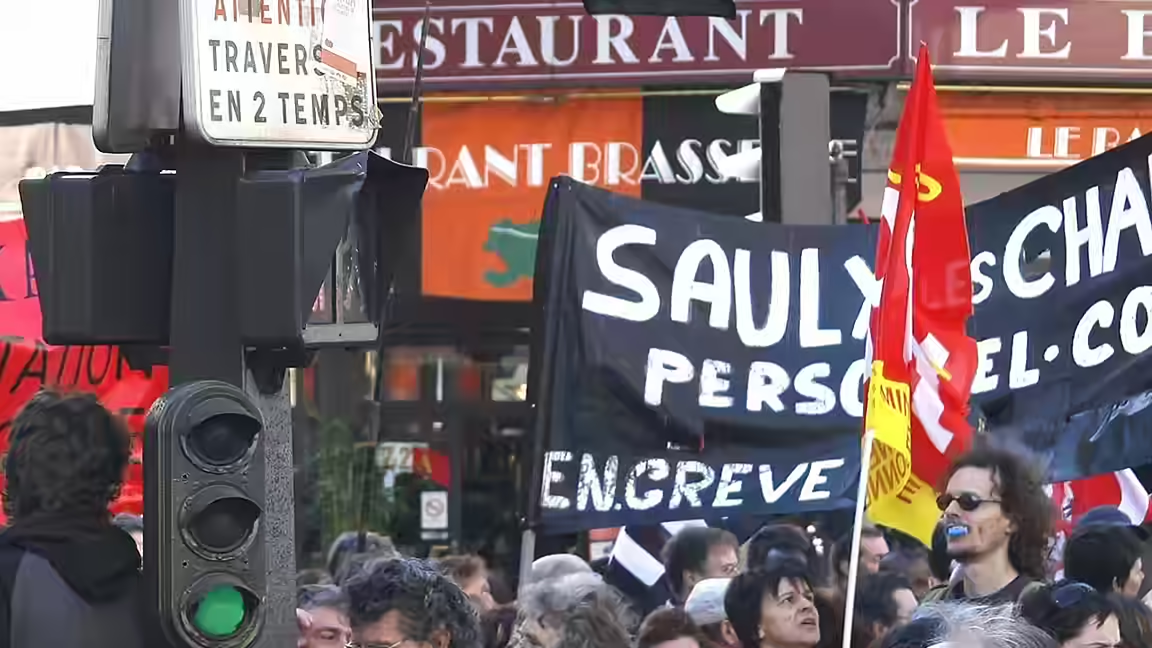
Hundreds of thousands of people marched across France on October 31 in a third consecutive weekend of protests over living costs, inequality and police violence. The Interior Ministry estimated national turnout at 320,000, including 70,000 in Paris, while a coalition of youth organisations and student unions put the total near 500,000 and claimed 200,000 participants in the capital.
The official count was lower than the 410,000 recorded the previous weekend and the 550,000 reported on October 17. The demonstrations brought together trade unions, students and Yellow Vest activists. Some participants wore Halloween costumes as marches moved through French cities.
Interior Minister Laurent Nuñez said the declared marches were largely orderly, but accused violent groups of attacking security forces. The ministry reported more than 290 arrests nationwide. It said groups in cities including Bordeaux, Toulouse and Marseille attempted to enter central districts to vandalise or loot property.
Clashes broke out in Paris as the main march reached its destination. Journalists saw masked people lift paving stones and throw them at officers, while at least one incendiary device was thrown. Police used tear gas and baton charges. The Paris police prefecture said several hundred rioters at the rear of the march were attacking officers with projectiles. A riot police officer struck by a Molotov cocktail suffered minor injuries, according to the interior minister.
Tensions were also reported in Marseille and Lyon. In Toulouse, police used a water cannon against an unauthorised gathering attended by several thousand people, many of them young and some in costume. Authorities nevertheless said dispersal of the declared demonstrations was generally completed without wider difficulty.
The turnout figures came from different institutions and were not independently reconciled. Government counts and organisers’ estimates commonly diverge, and both are presented here to show the range. Even using the lower official number, the marches demonstrated continuing national mobilisation despite a decline from the previous two weekends.
The protests combined economic and institutional grievances rather than a single demand. Rising prices were a central concern, alongside inequality, education conditions and allegations of police violence. Student unions also called for blockades of high schools and universities during the following week to press for education reform.
Saturday’s events therefore presented two distinct pictures: large, mostly peaceful processions and concentrated confrontations around their edges or after they ended. Officials emphasised the attacks and arrests, while organisers focused on participation and the pressures facing young people and households. Further planned student actions suggested the movement was likely to continue beyond the weekend.