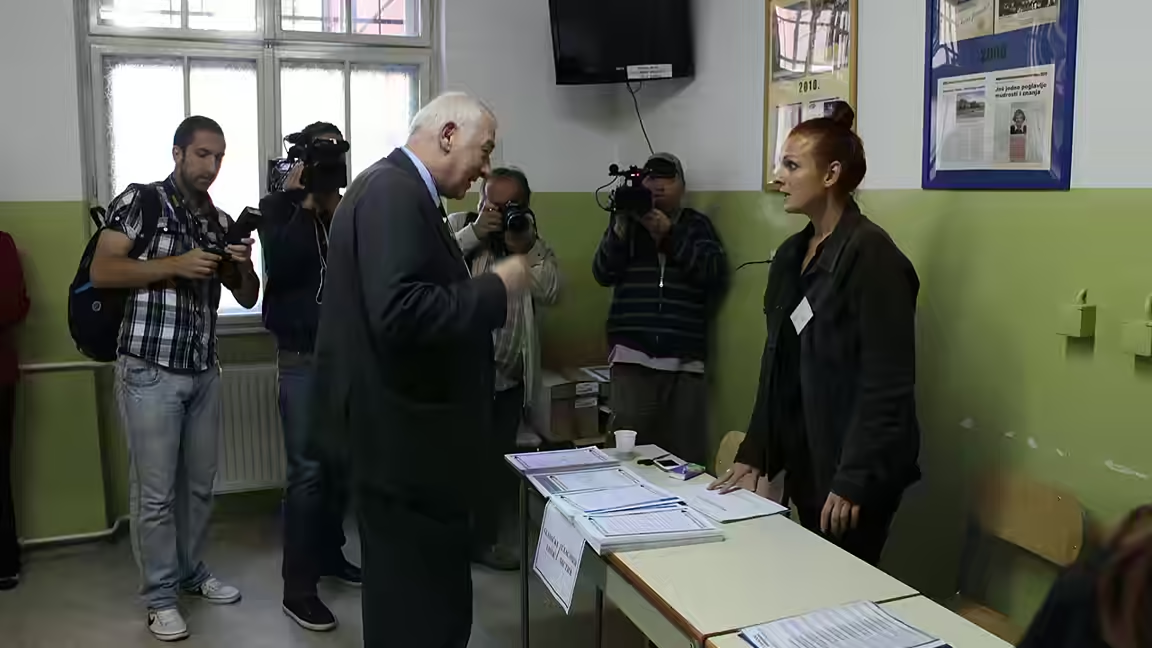
Bosnians went to the polls on October 4 in a general election shaped by the ethnic divisions embedded in the country’s postwar political system. Voters are selecting the three members of the state presidency along with representatives across several layers of government, including institutions in Bosnia’s two semi-autonomous entities.
The country’s governing structure grew from the 1995 Dayton agreement, which ended the 1992-95 war. Bosnia and Herzegovina was divided into the Serb-run Republika Srpska and a federation shared primarily by Bosniaks and Croats, with the entities linked by comparatively weak central institutions. The arrangement stopped the conflict but has repeatedly produced vetoes and stalled decisions.
The presidency race assigns one seat each to a Bosniak, a Serb and a Croat. Campaign positions again exposed competing views of the state. Bosniak parties advocated stronger national institutions and closer ties with the European Union and NATO. Serb nationalist leaders emphasized the autonomy of Republika Srpska, while Croat parties demanded electoral changes they say would give Croats greater influence over the choice of their presidency member.
Milorad Dodik remained prominent in the Republika Srpska campaign despite not appearing on the ballot. The entity’s former president was barred from the office for six years after a conviction for exceeding his powers, according to AFP. His SNSD party backed Savo Minic for the entity presidency. Opposition candidate Branko Blanusa was considered capable of mounting a serious challenge, making the race less predictable than Dodik’s long political dominance might suggest.
In the federation, incumbent Bosniak presidency member Denis Becirovic campaigned on renewing progress toward EU and NATO membership. An analyst from the European Stability Initiative told AFP that Bosnia’s state-level coalition had made little practical reform progress since 2024. That assessment echoed frustration expressed by activists who said established parties continued to mobilize voters through memories of the war rather than offering solutions to current problems.
Emigration was another concern. A young environmental activist in East Sarajevo told AFP that political paralysis was among the reasons people of her generation leave, believing public institutions offer too little reason to remain. Her account highlights the connection between constitutional deadlock and daily questions about jobs, services and opportunity.
Voting began late at dozens of polling stations because of technical difficulties as officials introduced biometric identification and scanning equipment for the first time. Polls were scheduled to close at 7 p.m. local time, with initial results expected later Sunday. The vote will fill many offices, but the central challenge will follow the count: whether the winners can cooperate across entity and ethnic lines in a system whose safeguards against domination also make collective action difficult.