A federal judge in Massachusetts on September 14 postponed new US visa rules that would impose fixed limits on stays by international students and foreign journalists. District Judge F. Dennis Saylor IV issued a preliminary injunction one day before the Department of Homeland Security policy was due to take effect. The order keeps the existing framework in place while a legal challenge proceeds and does not decide the lawsuit’s ultimate merits. A further hearing is scheduled for October 2.
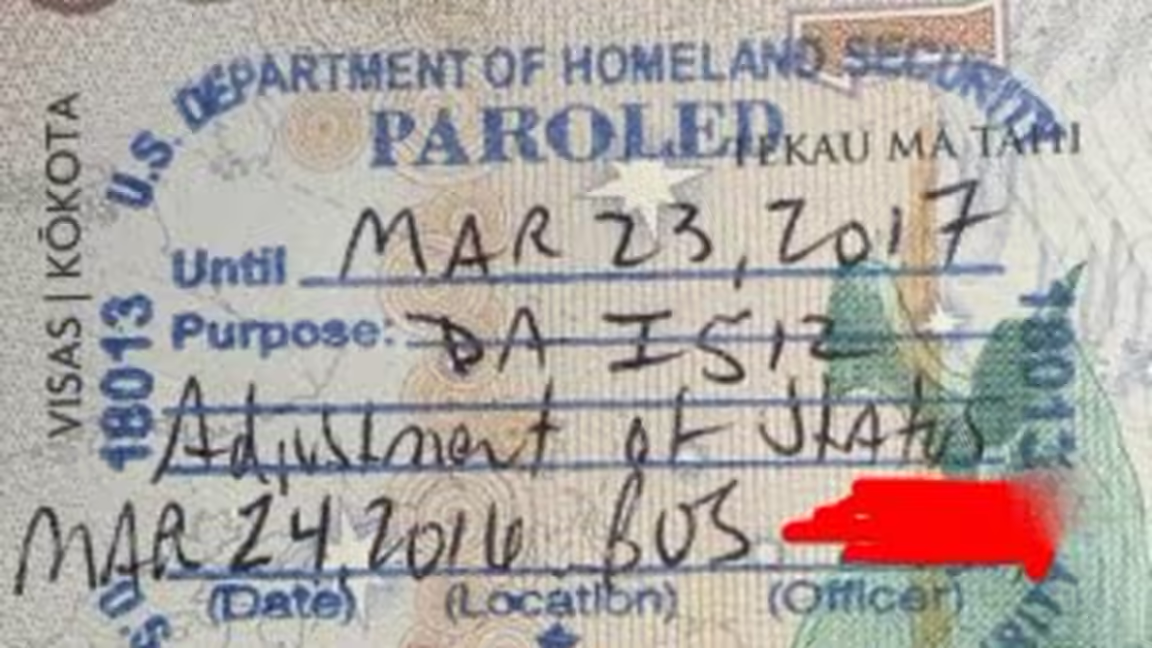
Under the planned rules, students would be admitted for no more than four years and would need to seek an extension if their programmes lasted longer. The existing approach generally permits them to remain for the duration of their studies. Foreign journalists would receive admission for 240 days, roughly eight months, and could request extensions for similar periods. Their previous permitted stays could extend to five years. Chinese journalists would face a separate 90-day limit, with possible 90-day extensions.
A coalition of unions representing universities, educators and journalists sued to stop the restrictions. In a memorandum accompanying his order, Saylor questioned both the policy’s design and the discretion it would give immigration officials. He noted the contribution of foreign students to research and economic activity and said the new programme would substantially restrict students, researchers, professors and journalists.
The judge was particularly concerned that extension decisions would be discretionary and could not be appealed. For students, a denial could abruptly end academic, teaching or research work. For journalists, he warned that a system without review could be used against reporters whose coverage was critical of the government or of Homeland Security officials. Saylor also rejected the department’s national-security rationale as resting on a small number of anecdotes.
The injunction means those objections will receive fuller consideration before the government can implement the policy. It does not guarantee that the plaintiffs will prevail, nor does it permanently prevent Homeland Security from changing admission rules. The next hearing may address whether the temporary block should continue and how the case should proceed.
The dispute affects a large population. More than 1.1 million international students studied in the United States during the 2023-24 academic year, according to official figures cited in reporting on the case. Universities rely on international enrolment across undergraduate, graduate and research programmes, while foreign media organisations use journalist visas to maintain US reporting operations.
The proposed restrictions are part of the Trump administration’s broader effort to tighten immigration controls, including legal routes of entry and residence. The court’s intervention places this part of that programme on hold. For students, schools and news organisations, the immediate result is continuity: the fixed expiration dates and more frequent extension applications will not begin while the preliminary injunction remains in force.