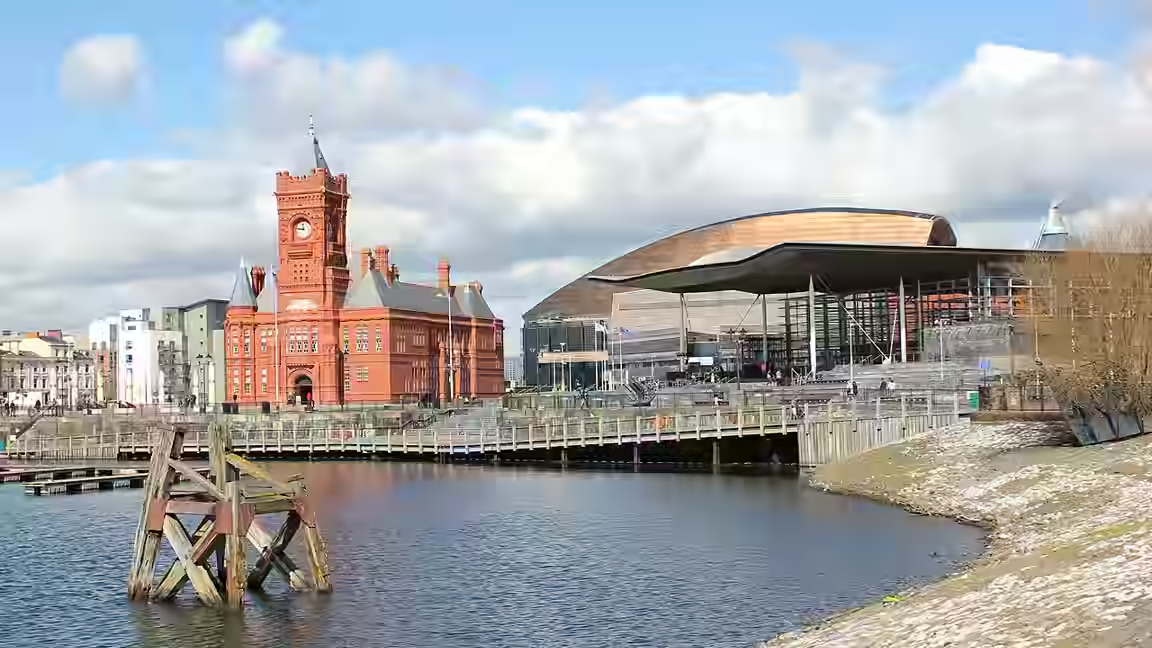
Nationalist leaders from Wales, Scotland and Northern Ireland met in Cardiff on September 14 and called for the UK government to prepare for possible constitutional change across the three nations. The gathering brought together Welsh first minister and Plaid Cymru leader Rhun ap Iorwerth, Scottish first minister and SNP leader John Swinney, Northern Ireland first minister and Sinn Féin vice-president Michelle O’Neill, and Sinn Féin president Mary Lou McDonald, Ireland’s opposition leader.
The participants signed a memorandum declaring that political conditions across Britain and Ireland were changing and arguing that Westminster should not obstruct votes on national self-determination. They called on the British government to plan for and facilitate constitutional change in each jurisdiction. The leaders attended in their party roles rather than formally acting as their respective governments, and their discussions also covered economic, energy and international cooperation.
The meeting marked the first in-person gathering of the sister parties since Plaid Cymru won the Welsh election in May, placing parties that support constitutional separation in government in Wales, Scotland and Northern Ireland at the same time. Despite the shared message, the routes and timetables they favour differ. Plaid Cymru has ruled out an independence referendum during its first term and is initially seeking greater devolved authority. The SNP wants another Scottish vote within five years, while McDonald said she expects a poll on Irish reunification by 2030.
Ap Iorwerth and Swinney separately signed the Cardiff agreement, a programme for cooperation between the Welsh and Scottish governments. It identifies child poverty, household costs and international engagement as areas for joint work, alongside efforts to argue for greater fairness and national control over constitutional questions.
The summit follows renewed debate over the UK’s territorial future. Prime Minister Andy Burnham has promoted stronger regional devolution in England since taking office in July, but has maintained that another Scottish independence referendum is not available. The UK government said its approach to the devolved administrations was based on partnership and that it was concentrating on household finances and economic security rather than further referendums.
Support levels also vary substantially among the nations. Polling cited in reporting on the summit put support for independence at 47% in Scotland, 36% in Northern Ireland and 32% in Wales. Cardiff University public-policy professor Laura McAllister said the event carried powerful symbolism but cautioned that the parties’ objectives and constitutional frameworks were materially different. She also argued that any serious restructuring of relationships within the UK would need England represented. The Cardiff meeting created a common platform, but it did not erase those practical and political distinctions.