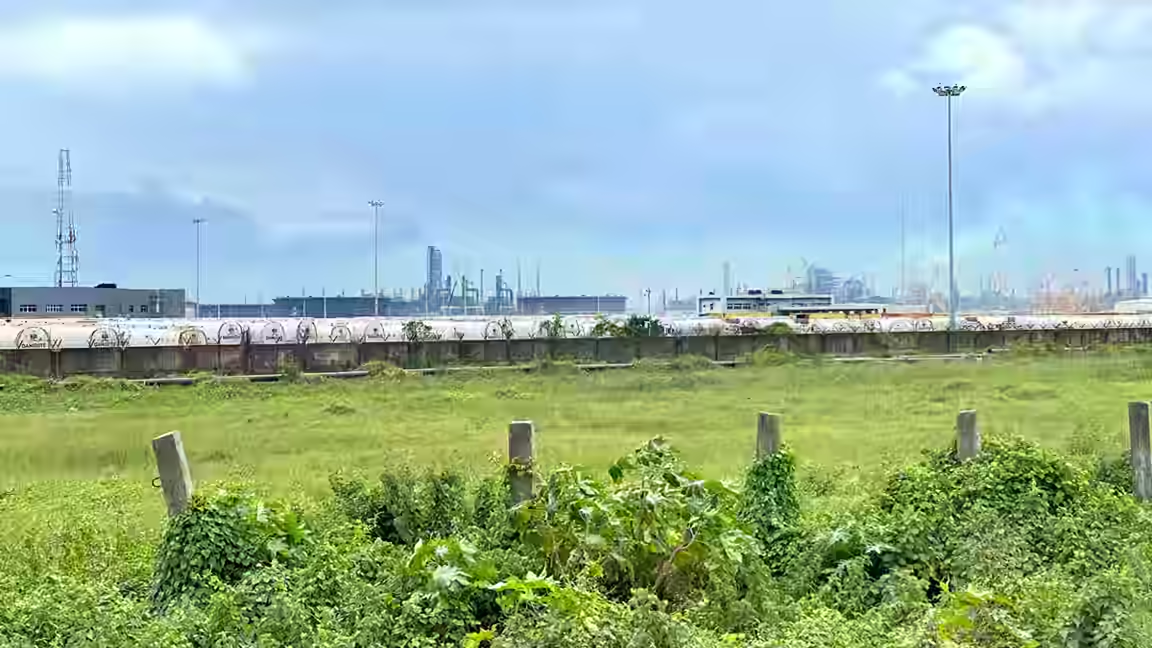
Dangote Petroleum Refinery launched an initial public offering on September 14 that aims to raise about 2.15 trillion naira, or $1.6 billion, in what the company says would be Africa’s largest share sale. The offer covers 4.1 billion shares priced at 525 naira each and is listed on the Nigerian Exchange. Investors can purchase as few as 10 shares, while the company says it hopes eventually to attract as many as 10 million shareholders across the continent. The offer is scheduled to close on October 13.
The refinery plans to use the proceeds in part to finance an expansion that would double processing capacity from 700,000 barrels a day to 1.4 million by 2028. At that level, the company says the complex would become the world’s largest refinery, moving ahead of India’s Jamnagar facility. The existing plant began operating in 2024 and already has capacity above Nigeria’s domestic demand. It has started selling fuel abroad, and the company says it has become Europe’s largest supplier of jet fuel.
Aliko Dangote presented the listing as an effort to distribute ownership of a major industrial asset beyond a small group of investors. The Nigerian billionaire encouraged participation by people on modest incomes and said the company wanted millions of people to share in the refinery’s long-term value. The low minimum purchase is intended to make the offer accessible to retail investors as well as institutions.
Interest was immediately visible on investment platforms. Bamboo reported unusually heavy traffic from users seeking access to the offering, while Cowrywise also said its application was handling more visits than normal during the opening hours. Those reports indicate demand for information and access, but do not by themselves establish how much of the offer will ultimately be subscribed.
The share sale follows a $2.5 billion investment secured from private investors in July. The refinery, located outside Lagos, is a central part of the Dangote business group, whose activities also include cement, sugar and fertiliser. Its scale gives the project significance beyond the company: an Africa Finance Corporation report published in April estimated that the continent imports more than 70% of its refined fuel.
Expansion would increase the refinery’s ability to serve both Nigerian and export markets, although completing the project on schedule will depend on construction, financing and operating execution. The IPO’s claimed record status and the future capacity ranking likewise depend on the completed transaction and expansion. For now, the offering represents a large test of investor appetite for African industrial infrastructure and of Dangote’s plan to pair greater public ownership with a major rise in production.